Love and Fitness are Patient and Kind

Love and Fitness are Patient and Kind

Love and Fitness are Patient and Kind

by Physical Fitness Coach, Daniel Stein

“Change your Health… Change your Life” Message


Are you patient and kind when it comes to personal fitness?

VERSE REFERENCE for Physical Fitness

1 Corinthians 13:4-7 NLT

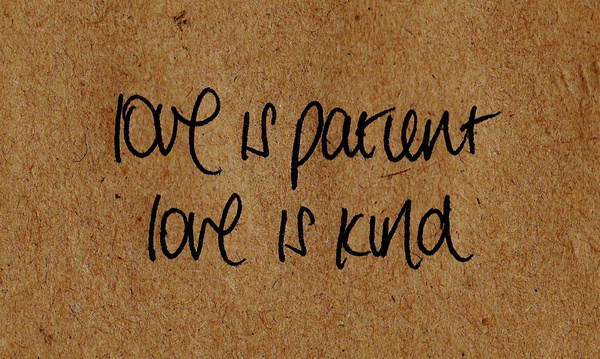
4 Love is patient and kind. Love is not jealous or boastful or proud 5 or rude. It does not demand its own way. It is not irritable, and it keeps no record of being wronged. 6 It does not rejoice about injustice but rejoices whenever the truth wins out. 7 Love never gives up, never loses faith, is always hopeful, and endures through every circumstance.


SPIRITUAL MESSAGE for Physical Fitness

We have all heard or read this verse many times in church and in the bible. Sometimes, we hear something so often that it just becomes “repetitive” and it loses a lot of its meaning and value. As Christians, we forget that this verse is arguably one of the most important verses in the Bible – God did say the greatest commandment was to love God with all your heart and your neighbor as yourself.

I often read this verse and think to myself … “I’m not patient” or “I’m always selfish and rude.” I’ve even said these things out loud, making these statements a part of my belief system. The more that I tell myself “I’m so impatient” or “I’m so selfish” the more I start to believe and act out in a way that shows I’m a selfish or impatient person. When the speed limit is 60 and the person in front of me is going 45, I get very impatient with the person going slow to the point that I’ll even cut them off! Why? I believe I’m an impatient and selfish person, therefore I act in that manner. “I’m just an impatient person – I can’t help it.”

Recently, a friend challenged me to examine the words I was speaking over myself and compare them with what scripture says. I found that many of the things I was saying about myself did not line up with scripture. Then, I spoke this over myself.

DANIEL is patient and kind. DANIEL is not jealous or boastful or proud or rude. DANIEL does not demand its own way. DANIEL is not irritable, and he keeps no record of being wronged. DANIEL does not rejoice about injustice but rejoices whenever the truth wins out. DANIEL never gives up, never loses faith, is always hopeful, and endures through every circumstance.

Which takes more faith – believing my default nature (impatient and selfish) or believing my new nature in Christ that says I am patient and kind?


PHYSICAL MESSAGE for Physical Fitness

When it comes to health and fitness, we can be so hard on ourselves. One piece of cake (or maybe two!) and we’ve blown it and are now walking in guilt and regret. We start to beat ourselves up for “messing up” and ruining any progress that we may have made during the previous days or weeks. When you do that, are you being patient and kind with yourself? Are you demanding perfection from yourself? Do you keep a record of all those bad calories you’ve just consumed? Do you lose hope that you’ll just never be able to eat the “right way?”

Health and fitness both require patience and kindness! You didn’t get to where you are today overnight, so don’t expect yourself to make changes overnight. It takes TIME to see the changes you want and it starts with being patient and kind with yourself. Like I always tell my clients … “Baby steps … one step at a time! It’s not a sprint; it’s a marathon.”


Love is patient love is kind - 1 Corinthians 134


APPLICATION for Physical Fitness

1.) Speak out loud 1 Corinthians 13:4-7 substituting your name in the verses. Consider printing it and putting it on your mirror.

2.) For one full day, examine your thoughts and words. Do they line up with what God says about you?


PRAYER for Physical Fitness

Lord, thank you that I am a new creation in Christ and I no longer have to surrender to my old selfish nature. Thank you that your mercies are new every single day and I don’t have to be perfect because you already accomplished perfection on the cross. Father, I repent of being so hard and impatient with myself and ask you to help me to be kind and patient just like you always are to me as the perfect father. In Jesus’ name, Amen.


By: Daniel Stein, NFPT-CPT

“Change your Health… Change your Life”

Find out more about this author here  https://www.specialstrong.com/

Originally Posted on Rhema Counseling Associates
Pomodoro Time!

Pomodoro Time!

Pomodoro Time!

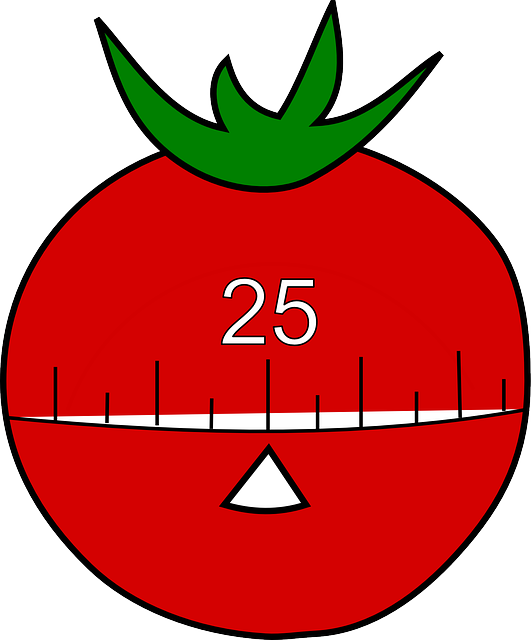
Pomodoro: denoting a sauce made from tomatoes, typically served with pasta; Italian – ‘tomato’
OR

A time management technique developed in the late 1980s by then-student Francesco Cirillo.

If we’re honest, most of us—at one time or another—have trouble managing our time; life happens, and too often, daily distractions keep us from getting the OTHER important tasks accomplished that we want or need to do.

Like writing.


The Pomodoro Technique is here to help!

Prepare to be amazed! While the Pomodoro Technique can help with many daily tasks—cleaning, study, music practice, etc.—using it for writing is a great way to see progress.

Cirillo decided to call this technique Pomodoro—tomato—after the kitchen timer that looks like a tomato. The idea is that you work using the timer, breaking your work into manageable chunks of time.

Cirillo recommends 25 minutes for each Pomodoro session, working without interruption for that allotted time. Once the timer goes off, you must stop what you’re doing for five minutes (set the timer for this time, also). When the timer buzzes, signaling that it’s time to work again, set it for 25 minutes and work diligently for that time, then take a five-minute break, and so forth.

The key to success is that you schedule and work as many Pomodoros as possible during your day, with three or four sessions being the minimum. Your break time can be anywhere from five to fifteen or so minutes, depending on your day—but I have found that scheduling the break-time for five minutes works best—especially if you have a full day to commit to writing.


Distractions

In order for the Pomodoro Technique to be effective, recognizing distractions—both internal and external—is important. Before you start the timer, here are a few tasks to help minimize distractions:

  • Write down your writing ideas. You can jot down single words, short phrases, etc. Keep writing for about five minutes until you have a good list of ideas.
  • Make a list of the things you need to do OTHER than writing during your day, and if, while you’re writing, you think of something that is urgent or needs to be done, write it on your “To Do Today” list.
  • Make a different list for activities that are not urgent. This way, if you have time between Pomodoros, you may be able to accomplish one or the “Today” tasks.
  • At the end of your Pomodoro sessions for the day, once you’ve looked at ALL OF THE WRITING YOU’VE ACCOMPLISHED, you’ll be able to go down your list with satisfaction, knowing that your writing is getting done!

Once you’ve worked through three to six (or more) Pomodoros in a day (the number you do depends on your own work habits and schedule), celebrate by making that Pomodoro sauce— and then put it over pasta!

By Lee Desmond, originally posted on Rhema Publishing House
Your Job as a Writer: Tell Your Stories

Your Job as a Writer: Tell Your Stories

Your Job as a Writer: Tell Your Stories

“Every secret of a writer’s soul, every experience of his life, every quality of his mind, is written large in his works.” Virginia Woolf

Oh, the Stories We Have to Tell!

The human experience is made up of stories—good, hard, sad, ugly, beautiful…memorable. Do we tell enough of them? Do we write enough of them? Probably not—but because we live and have a soul, our stories are valuable.

When I was in junior high, my language arts teacher taught us to write about what we know. It must have made an impression, because I can still see her telling this to our class!


Here are some important points to think about:

  • Write about what you know—experiences you’ve had, real people (actual names or made up) you’ve known, familiar/remembered places.
  • If you’ve kept a journal, read and refer back to it. Just one word may remind you of an event you could use to jump-start a story.
  • Read. The more we read, the more we learn. When we read a lot, we learn to distinguish between good writing and bad, what words work well, how to structure scenes and sentences, what types of stories are worth spending time reading. And we often learn all of this without even realizing it.
  • Write write write. Set a goal to write something every day. Even if it’s fifteen minutes, write something.
  • Remember that your first draft is just that: a draft. It is not the final product, so it may be terrible. But it’s a start, and you’ll be glad you’ve got it! (More on this later.)
  • Don’t edit while you write. Once you finish, read from the beginning—you’ll start editing somewhat naturally.
  • Have trusted friends or family help with the editing process and give constructive feedback.
  • Hire a professional editor to get your story ready for publication.

This list is short, but I hope it is enough to get you started.


About that first draft…

One thing I’ve begun to practice with almost everything I write: when I  get to the “end,” I let it rest for a day or so, then go back, reread, and almost always rewrite—at least part of it. I do this with emails, letters, essays, blogs, social media posts—anything I plan to publish or share with others. By doing this, I make sure I’m saying what I want to say by using the right words, only the words needed, and that I’ve communicated with love and grace. I’ve looked back with chagrin at some of the letters or papers I wrote years ago that weren’t edited in this way, and all I can say is that I’m glad those are behind me!

So start that story!

What you have to say is important, and others will be blessed by your words.

By Lee Desmond, originally posted on Rhema Publishing House

Grief: There is no “Right Way” to Grieve

Grief: There is no “Right Way” to Grieve

Grief: There is no “Right Way” to Grieve

Grief Defined (Miriam Webster)

A deep sadness caused especially by someone’s death, a cause of deep sadness.

The conflicting feelings caused by the end of or change in a familiar pattern of behavior.

When someone important to us dies, it represents an end to what has been familiar for us, and we must adapt to that new—usually unwanted—reality.

I would add to “usually unwanted reality” surprised and possibly shocking reality.


My First Grief Experiences

When I was 17 and my brother was 14, our dad died suddenly. He had just started work for a new company, we were starting our Christmas decorations for that year, and life seemed to be rolling along for our family. Then everything changed, suddenly and shockingly.

As a 17 year-old, the only death I’d experienced—the first true grief—was that of my grandfather the year before. He lived across the state from us, and when he died, our family went. At least, most of the family; I stayed behind. I didn’t want to remember Granddaddy any other way than how I last saw him—so my parents let me stay home. Maybe they figured I’d need to work out my grief in my own way.

So when my dad died almost a year to the day later, I began to experience grief in a whole new light. I watched my strong, independent, “drill sergeant” mom fall apart; over the next days and weeks, she didn’t sleep, she had phantom illnesses, she stared into space for hours. My brother—who up to that point had been a fairly happy-go-lucky guy—over the next several months, became angry and rebellious and would often rage over small things.


Grief—there is no one way or right way to experience it.

As for my reaction to Dad’s sudden death—I pretty much remained calm and strong for everyone else. Because Dad was a WWII veteran, there would be no funeral or service for several weeks (his body was cremated) until our family could get to the National Cemetery. So for me, life went on. I picked up the slack around the house, I tried to calm my brother down, I went with Mom to the hospital when she thought something was wrong. My school choir was in the middle of rehearsals for a Christmas performance, so I went to rehearsal. I stayed busy with school and at home, and I spent a lot of time in my room, alone with my guitar.


There is Help.

Someone I Love Has Died: Everyone Grieves and No One Grieves Like Me is a book where children can read about how grief is personal and individual for everyone; that there isn’t one way to grieve or to feel, that it is a process each person walks through differently. The coloring pages are available for filling in or doodling or writing, showing how unique grief is to each of us.

In this book, author Karen Lindwall-Bourg also gives parents and care-givers tools with which to help guide children through their own grief process. “Written for grieving children, ages 3-99, and for those who walk this journey with them,” this little book will help people of all ages understand that grief isn’t static and that each person grieves in his or her unique way.

By Lee Desmond, originally posted on Rhema Publishing House
Wellness: Renewal of the Whole Person

Wellness: Renewal of the Whole Person

Wellness: Renewal of the Whole Person

Do not be conformed to this world, but be transformed by the renewal of your mind …

—Romans 12:2a (ESV, emphasis added)


Transform : make a thorough or dramatic change in the form, appearance, or character of.

Renewal : the replacing or repair of something that is worn out, run-down, or broken.


We all need to make changes from time to time, and often those changes need to be thorough and dramatic, going from unhealthy to healthy, from broken to renewed.

To wellness.

Parts—or thoughts—may need to be replaced, transformed, and revived. So how do we make those life changes? How do we get to wellness?

Beliefs

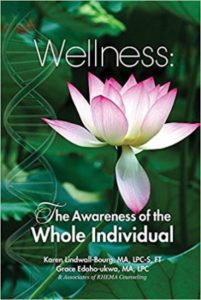
Wellness: The Awareness of the Whole Individual focuses on the acronym BELIEFS. Each chapter highlights one area of BELIEFS and ends with an assessment for help in determining areas in life that may need attention. True wellness should be cultivated in key areas of our lives:

  • Body
  • Emotions
  • Livelihood
  • Intellect
  • Environment
  • Family & Friends
  • Spiritual


The necessity of health and wellness is before us constantly—on social media, on billboards, in magazines we see in the grocery check-out line, on television. Our culture is obsessed with the latest health food, living a stress free life, the easiest and guaranteed-to-work diet plan. And yet, wellness is about so much more than only the physical. Each of these areas is important in providing peace and rest for our souls.


For as he thinks within himself, so he is. —Proverbs 23:7 (NASB)


A friend of mine, who recently became a Life Coach, instructs her clients that they control and direct their emotions by controlling and directing their thinking. Likewise, in each of these areas of BELIEFS, we have the ability to make choices toward wellness and health.


“A healthy outside starts from the inside.” —Robert Urich


Because we live in a fallen world, the storms of life will come our way. This encouraging and practical book helps to navigate through those storms, pointing us toward a life of wholeness and wellness while we’re on this earth.


“The part can never be well unless the whole is well.” —Plato


By Lee Desmond, originally posted by Rhema Publishing House